
Running my first 250km ultra-marathon in 12 years (Part 1)
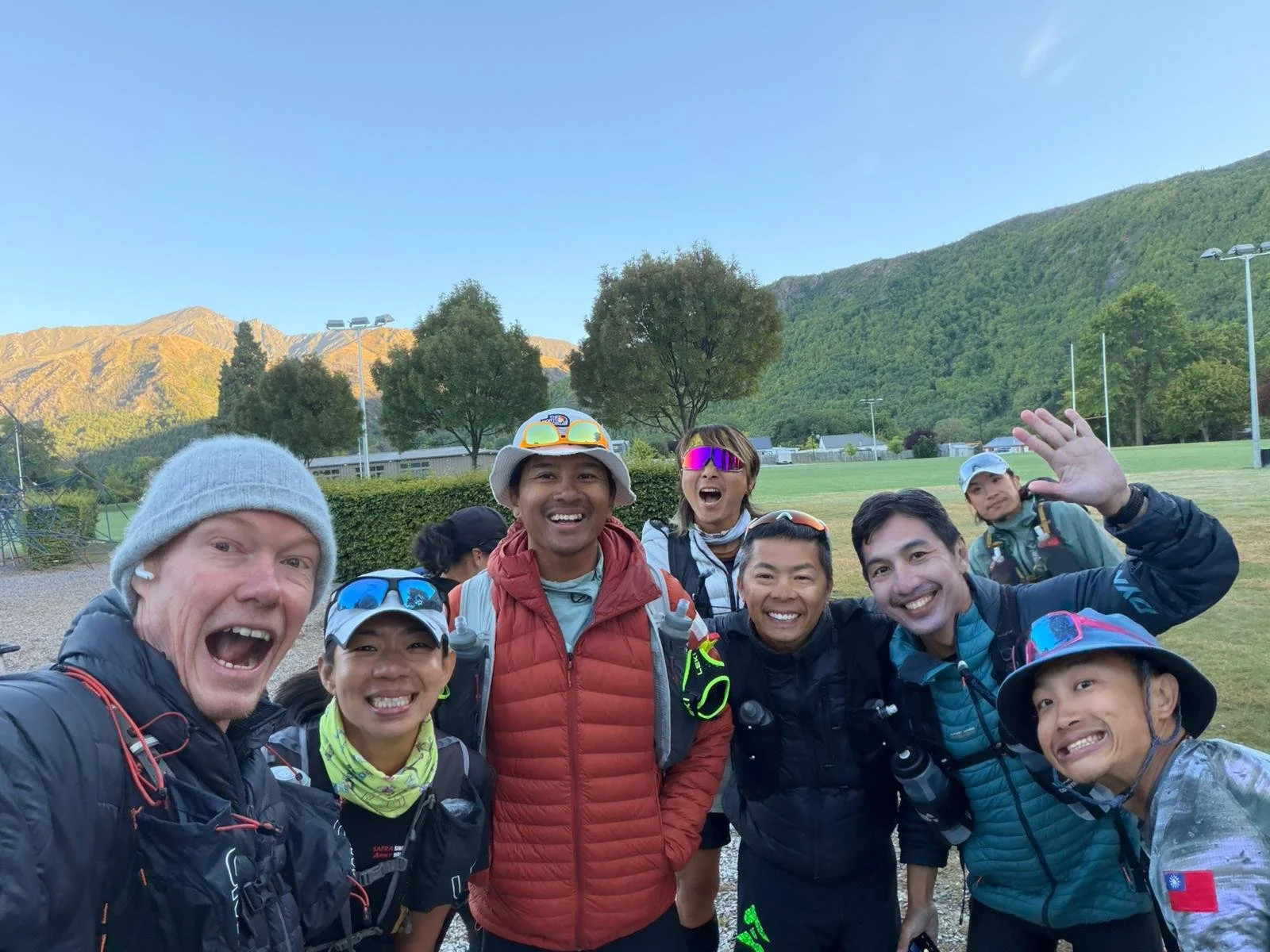
Dear friends and network,
Many of you will know that I’ve just finished a 250km ultra-marathon in the Southern Alps of New Zealand. Ultra-marathons were a sport I got into in my late 20s, and they defined my journey from then on. At the same time, I was pouring energy into other passions: HR, design, farms, islands, and whatever other pursuits took me down a tangent.
After hitting a wall with burnout a few times, often the result of the sheer weight of some of my own ideas, I started a simplification process for my life. I began selling companies and "things" just to recover my energy. I couldn’t simply wave a magic wand to remove the responsibilities I’d created, even though I’ve always been surrounded by gifted and loyal employees and friends. Anyway, cue the violin, as we all have our struggles. Overcoming mine was my responsibility alone.
Along the way, I had a new vision building. I could see it and smell it; it was happening naturally. To use a car analogy, it was like the accelerator and brake were being applied at the same time. I had to clear the way to start picking up true momentum.
Fast forward to 2026. With the clearing of Parihoa finally on the horizon after several years of waiting, my well-being was reaching a level where I might be able to tackle an ultra-marathon again. It might seem crazy to others, but to me, it was a litmus test that my energy was returning. Knowing this, I signed up in November 2025 for the Southern Lakes Ultra, a spectacular 250km multi-stage race.
The months between then and Parihoa clearing in late January 2026 were still a bit funky. I couldn’t get my energy quite right and felt lethargic. I kept my focus on critical commitments but said no to almost everything else. I knew I was going through yet another bout of burnout, and to be honest, I was tired of it.
The variable I haven’t mentioned is that, in the south of NZ, I am in the final stages of completing "Telepathy." Those of you who have experienced "Edge of the World" know it’s something special. It’s taken a lot of hard work and dedication, but it’s also been my sanctuary of regeneration over the past few years. Creating this extraordinary place has tested the boundaries of my capability. Challenge by challenge, it has started to fall into place. I wouldn’t do it again; but then, who would with most of the big, lofty things we set our hands to? I certainly don’t regret it.
So, the Southern Lakes Ultra is looming. It’s now February 2026. I actually have an insurance policy on the race, and I’ve started researching how to get out of it. I call Kerryn, the race organiser, several times. "Matt, you can’t get out of it," she tells me. My friend, KS, is due to arrive from Singapore soon. In my determination to see my goal through, I tell him, "I am likely doing this."
As a last resort, I contact a running mentor in her 70s. Let’s call her "Wolf Mother." She is a dear friend with an extraordinary perspective on nutrition, endurance running, and pushing oneself out of the comfort zone. I get a very direct answer to my question: "Can I do this?"
"You’re doing it, Matt," she says.
The week before 22nd February, I start reading the race information. I’ve been too scared to look at the protocols. Even worse, I’m in a last-minute rush to buy and pack my equipment. Because I am a "supported" competitor (as opposed to unsupported), I’m allowed 15kg in a large bag that will be moved between camps. This means I can stuff in luxuries beyond the typical freeze-dried breakfasts and dinners. I buy treats like flavoured tinned tuna, pita bread, dried fruits, and ground coffee. I also stash extra warm clothes in my bag, as the New Zealand southern summer has been unpredictable.
Compared to my six previous desert races, this extra bag is pure luxury. In the deserts, I was limited to a 6kg pack that I had to carry myself. In the Southern Lakes Ultra, there is still a day pack for essential gear: waterproofs, thermals, a down jacket, first aid kit, and a mandatory 2,000 calories.
Friday 20th February rolls around. Suddenly, I’m in Queenstown for the gear check and briefing. I’m feeling excited but nervous. The pre-race vibe of ultra-running is always one of pure anticipation. After a traditional New Zealand haka, Kerryn briefs us on the week ahead. The weather is going to be unpredictable, the climbs will be horrendous, and the mornings will be freezing. The days will be scorching. We’ll be in communal tents, but we’ll also see some of the most amazing scenery on Earth.
There are around 70 competitors from 20 countries and close to 25 volunteers. Ages range from 25 to 74. At 49, I am exactly in the middle. I see my younger self and my future self at the same time. This is just the start.
My mate KS and I return to Wanaka that evening for one last night of luxury before we join the field in nearby Lake Hawea the following afternoon. As I tie up loose ends at home, I have that sick feeling that I may never return. KS and I share the same psychology: if it gets too hard, we’ll pull out. For me, that could be Day 1!
It’s Saturday 21st February. We arrive at Lake Hawea. The winds are too strong to put up the race camp, so we are all crammed into the Lake Hawea Community Centre instead. I feel a bit like I’m sleeping on an airport floor. I roll out my mat and sleeping bag, unpack my gear, and after a catered dinner (our last for a week), I pop in my earplugs and dream of what’s ahead.
Continue to Part 2.